Address
102 Tam Road, Huntsville TX 77320 USA
SALE HOURS
IN-PERSON SALE IS FROM 8am-12pm SATURDAY, OCT. 10
Featuring a Large Selection of Plants Lovingly Grown or Selected by Our Master Gardeners For Your Enjoyment.
IN-PERSON ONLY — Sale runs from 8am-12pm Saturday, Oct. 10.
LOCATION: 102 TAM ROAD IN HUNTSVILLE (ON SH-75 NORTH OF PILOT TRUCK STOP.)
NOTE: Please look through this catalog for a preview of all that’s available!
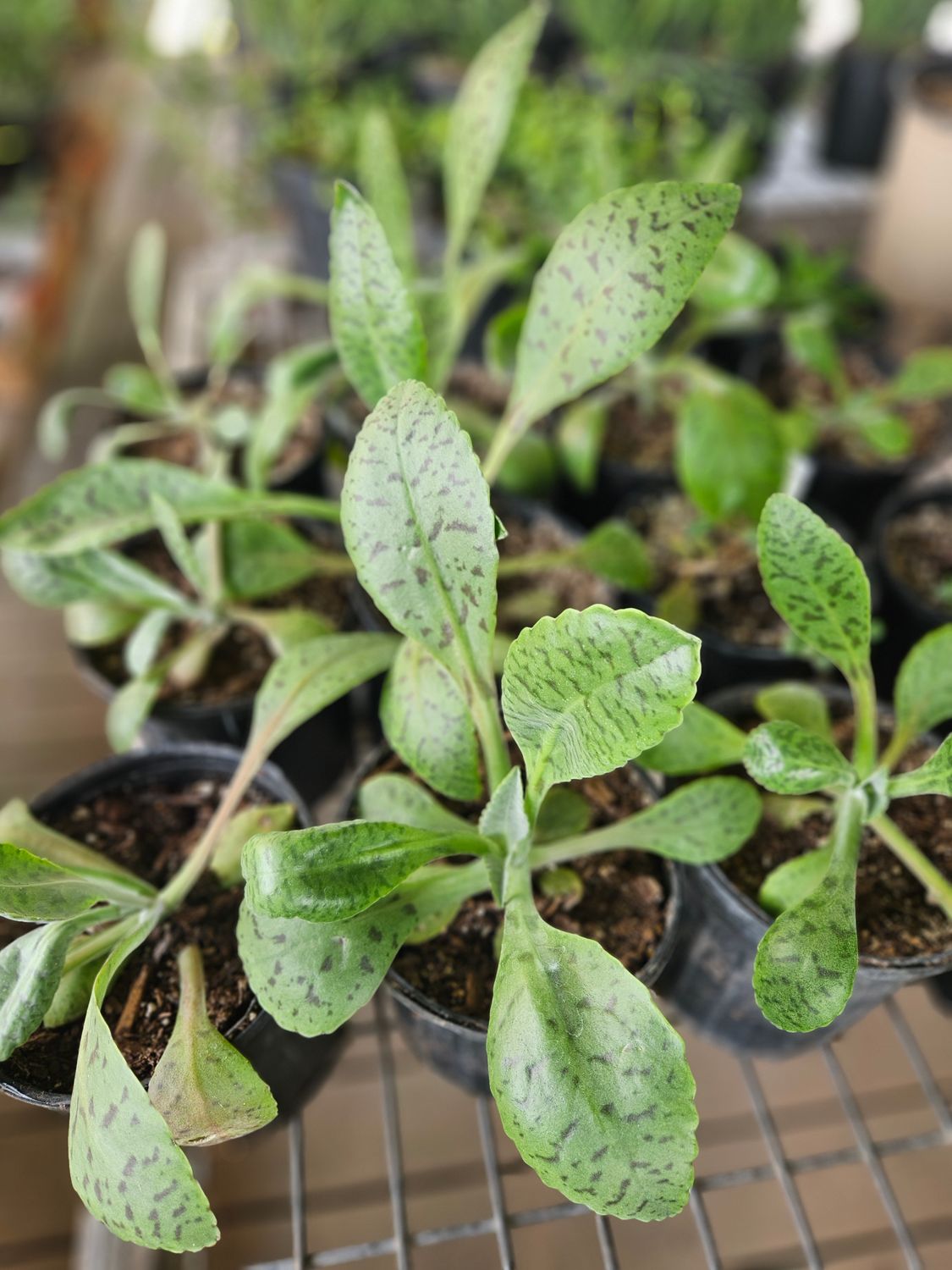
Donkey-ear kalanchoe (Kalanchoe gastonis-bonnieri) is a succulent with long, floppy, gray-green leaves often marked with brown spots. It produces tiny plantlets along the leaf edges or tips.
| Need | Care |
|---|---|
| Light | Bright light with several hours of gentle direct sun. Morning sun and filtered afternoon sun are ideal. Acclimate it gradually to strong outdoor sunlight to prevent leaf scorch. |
| Water | Use the soak-and-dry method: water deeply, then let the soil dry nearly completely before watering again. During active growth, this may be every 1–3 weeks indoors. In winter or during dormancy, water much less—sometimes only monthly. Avoid water collecting in the leaf crown. |
| Soil | Very fast-draining cactus or succulent mix. A pot with drainage holes is essential. |
| Size | Usually 12–24 inches tall and wide, though a mature flowering plant can become taller. Flower stalks may reach 2–3 feet. It spreads readily through offsets and plantlets. |
| Flowers | Tall, branched stalks carry hanging, tubular flowers, commonly greenish or pale pink with red-orange tips. Flowering is most common in winter or spring and generally occurs after the plant reaches maturity. The flowering stem may die back afterward, but offsets continue growing. |
| Frost tolerance | Not frost-hardy. Protect below about 40°F (4°C); temperatures near freezing can cause serious damage or kill the plant. It can grow outdoors year-round only in frost-free climates, approximately USDA Zones 10–11. |
| Fertilizer | Feed lightly with diluted succulent fertilizer during spring and summer. Avoid heavy feeding or fertilizing when dormant. |
Give it good airflow and avoid frequent small sips of water. Soft, translucent leaves or a mushy stem usually indicate overwatering or cold, wet conditions. The plantlets can be removed and rooted directly in dry-to-slightly-moist succulent soil. It is toxic if eaten by pets.
Walker County Master Gardeners are volunteers committed to education and outreach on a wide variety of horticultural subjects. Our association was founded in 2001 and is part of the Texas Master Gardeners Association.
WALKER COUNTY MASTER GARDENERS
TX A&M Agri-Life Extension
Master Gardeners are members of the local community who take an active interest in their lawns, trees, shrubs, flowers and gardens. They are enthusiastic, willing to learn and to help others, and able to communicate with diverse groups of people.
What really sets Master Gardeners apart from other home gardeners is their special training in horticulture. In exchange for their training, persons who become Master Gardeners contribute time as volunteers, working through their cooperative Extension office to provide horticultural information and education back to their communities. If you are interested in becoming an Extension Master Gardener, contact your AgriLife Extension office.
SALE HOURS
IN-PERSON SALE IS FROM 8am-12pm SATURDAY, OCT. 10